
Every winter, homeowners ask us about ice dams. Here’s the honest answer: any roof can get ice dams, metal included. A metal roof handles them better than most, but the real cause is heat escaping from your house. Here’s how ice dams form, and what actually helps.
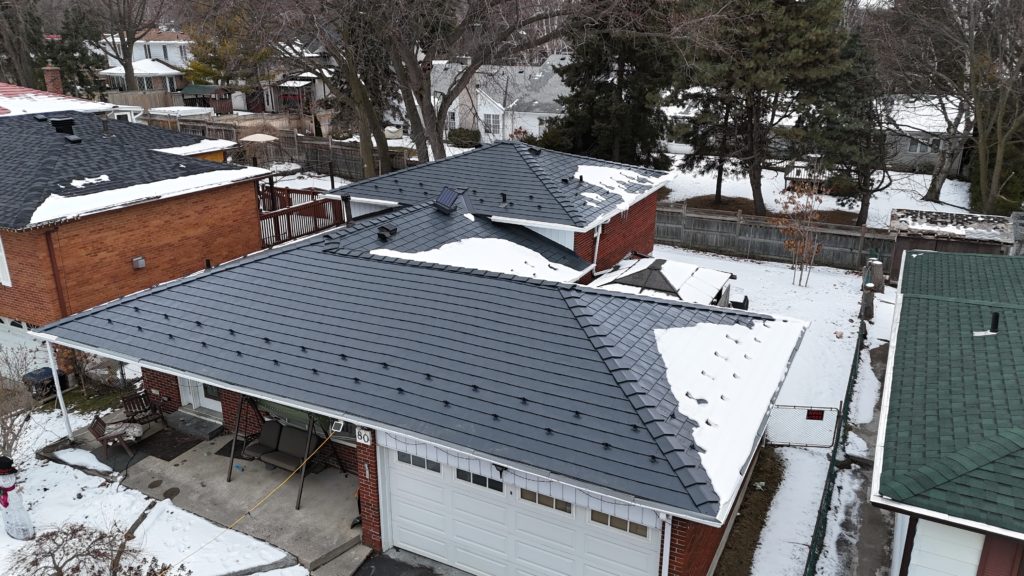
How ice dams form
Your house loses heat into the attic. That heat warms the underside of the roof and melts the snow on top. The water then runs down to the eaves, which hang out past the warm part of the house, and freezes again. Over time, that builds a ridge of ice that traps more water behind it.
Signs you have one
- Thick ice along the eaves
- Large icicles
- Water stains on ceilings or walls near the outside walls
What a metal roof does, and doesn’t, do
Our roofs lock together on all four sides, so they resist water backing up better than most roofs. However, they don’t stop it completely. That’s why, on a bare deck, we cover the entire roof with ice and water protection before the metal goes on. It’s a second line of defence under the metal.
Snow guards are worth knowing about too. They hold snow on the roof, which is what you want above a door or driveway. But if your attic is losing a lot of heat, holding the snow in place can make ice dams worse. Here’s how snow guards work.
What actually helps
- Stop the heat loss. Good attic insulation and air sealing keep the heat in your house, where it belongs. We don’t do insulation, but it’s the first thing to look at.
- Vent the attic. Good venting keeps the roof deck cold, so snow doesn’t melt from below. When we install a new roof, venting is part of the job. Here’s how roof venting works.
- Use a plastic roof rake. A plastic rake is fine on a metal roof, but a metal rake can scratch the finish. Always rake from the ground.
- Think twice about heat cables. They can be installed on a metal roof, but we don’t recommend them. The cables have to be fastened somehow. Screwing them through the roof defeats the purpose of hidden fasteners, and wrapping them around snow guards lets sliding snow wear the cable, which can become a safety issue.
Planning a new roof before next winter?
Call 866-969-7663, or request a free quote.