
A question we hear from homeowners: will a metal roof hurt my WiFi or cell signal? It’s a fair question, because metal does reflect radio signals. But in most homes the signal doesn’t come in through the roof, so a metal roof makes little or no difference.
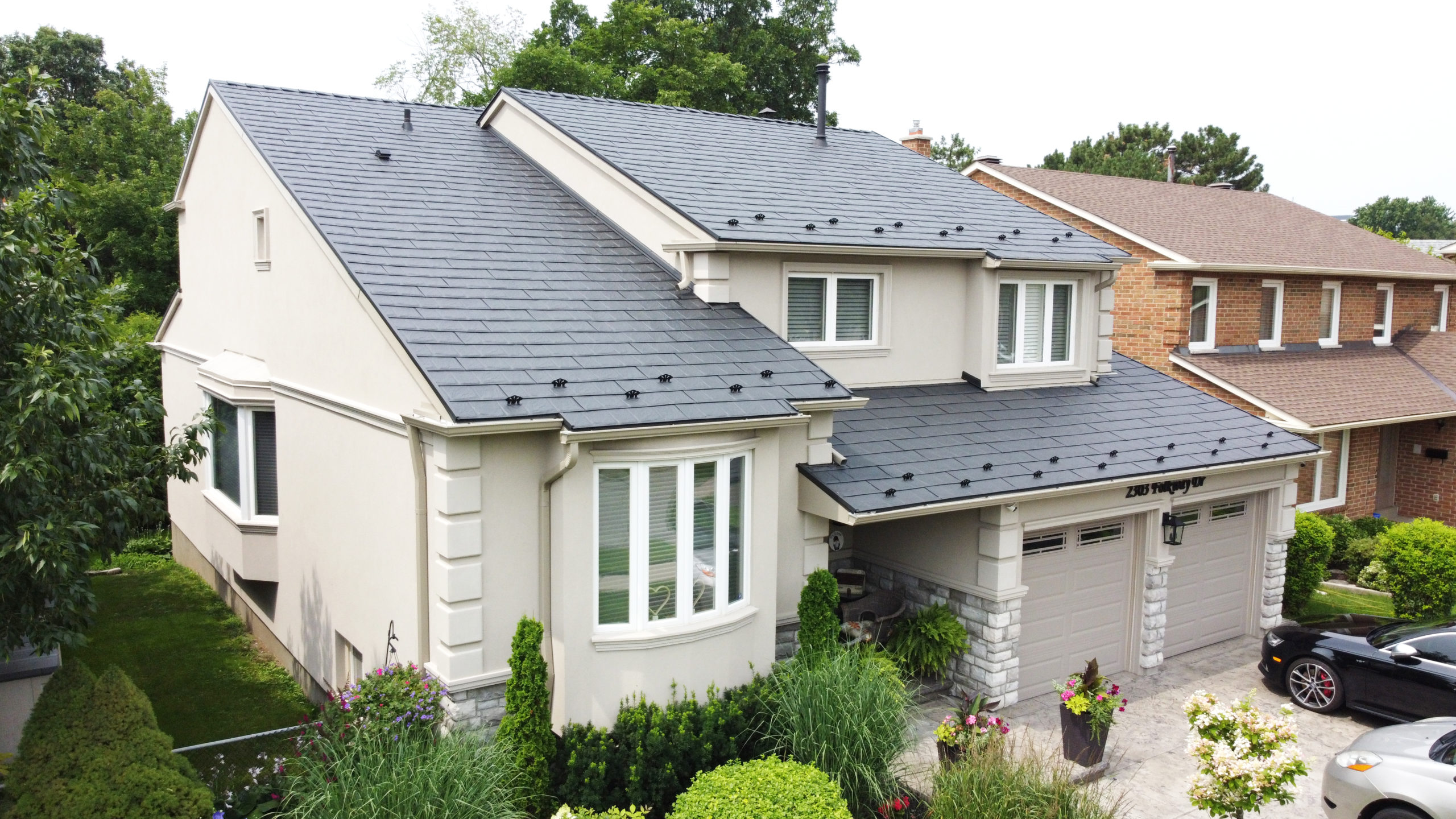
Your WiFi starts inside the house
Your router sits inside your home, and WiFi travels from it through your rooms to your devices. The roof isn’t between your router and your phone or TV, so it doesn’t get in the way.
Cell signal comes in from the side
Cell towers are usually kilometres away, so their signal reaches your home at a low angle, mostly through walls and windows. Very little comes straight down through the roof. The things that affect indoor cell signal most are:
- Distance from the nearest tower, and hills, trees or buildings in between
- Low-E window coatings, which block more signal than most people expect
- Foil-faced insulation in the walls
- Brick, stone and concrete walls
If your cell signal is weak under an asphalt roof, it will usually be just as weak under a metal one. If it’s good now, it will usually stay good.
Where you might notice a difference
There are a few cases where the roof does matter:
- A TV antenna in the attic. Metal will block it, so the antenna needs to move outside, on a mast or the side of the house.
- A WiFi extender in the attic that reaches a garage, shed or backyard. Move it to a top-floor room or an outside wall instead.
- Rooms right under the roof, like a finished attic, when cell signal is already weak.
Each of these has a simple fix: move the antenna or extender, add a mesh WiFi point, turn on WiFi calling (most phones support it), or add a cell signal booster.
What we see on real homes
We’ve installed over 5,000 roofs, and complaints about WiFi or cell service afterward are rare. When one does come up, the home usually had weak signal before, and moving the router or adding a booster solves it.
Questions about a metal roof for your home?
Call 866-969-7663, or request a free quote.